The marketing says "energy savings"
Walk into any window showroom, and you'll hear the same pitch: "Triple-pane windows save you money on your energy bills. They're more efficient. They pay for themselves over time."
The math isn't wrong. Triple-pane windows have a lower U-factor than double-pane—typically 0.15 to 0.20 for triple, compared to 0.25 to 0.30 for a good double-pane. That's a 25-40% improvement in thermal resistance. The window loses less heat in winter and gains less heat in summer.
In a cold climate like Colorado's, that sounds like a no-brainer. More insulation means less heat loss, which means lower heating bills. Right?
Yes. But not by as much as you think.
Let me show you what the numbers actually look like.
The energy savings math
I've run this calculation a dozen times for different clients. Here's a typical scenario for a Denver-area home:
2,500 square feet, two stories
25 windows, average size 4x5 feet
Natural gas heat, 80% efficient furnace
Denver heating degree days: ~6,000
Double-pane windows (U-0.30): Annual heating cost for window heat loss: about $1,200 in a typical winter.
Triple-pane windows (U-0.18): Annual heating cost for window heat loss: about $720.
The difference: about $480 per year.
That's not nothing. But it's not the windfall that the marketing implies, either.
Over 10 years, that's $4,800 in energy savings. The upgrade cost for triple-pane over double-pane is typically $200-$300 per window, or $5,000-$7,500 for a 25-window house. The energy savings might pay for the upgrade—at the lower end of the upgrade cost, over 10-15 years. At the higher end, the energy savings never fully cover the upgrade cost.
For a typical Colorado home, the energy savings from triple-pane windows pay back in about 12-15 years, depending on window count, orientation, and heating costs. That's longer than most homeowners plan to stay in the house.
So if energy savings is the only reason you're buying triple-pane, the math doesn't always work.
What triple-pane actually does better
Here's where the story gets interesting.
I've installed triple-pane windows in dozens of homes across the Denver area. And I've asked every client, a year or two later: "Do you notice the energy savings?"
Almost none of them say yes.
But almost all of them say something else:
"The room feels warmer."
"We can sit by the window in winter without feeling a draft."
"The condensation on the windows is gone."
"It's quieter inside."
"I don't have to keep the thermostat as high."
These are not energy savings. These are comfort improvements. And they're the real value of triple-pane windows.
Comfort: the overlooked benefit
The "feels warmer" effect isn't psychological—it's physical.
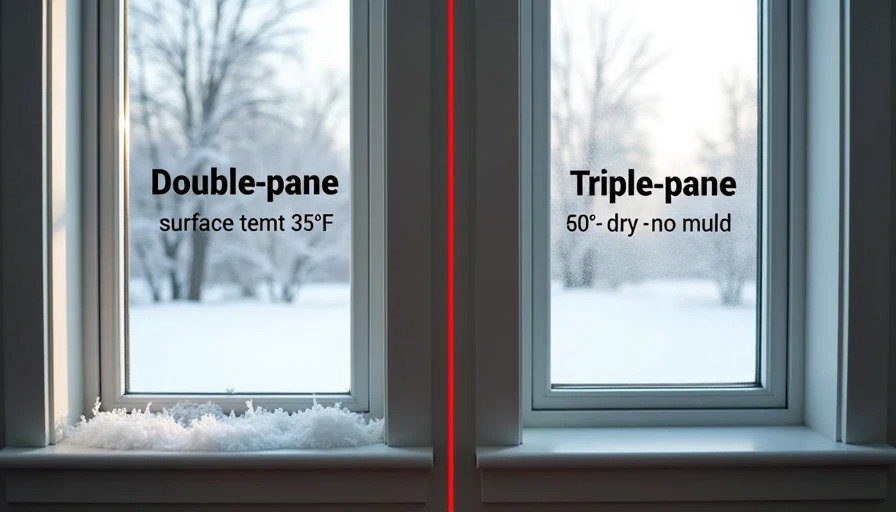
A double-pane window has an interior surface temperature that's close to the outdoor temperature in winter. On a 20°F morning, the interior glass of a double-pane window might be 35-40°F. That's cold. If you're sitting within 3 feet of that window, you're losing radiant heat to that cold surface. Your body feels the heat leaving you, and you feel cold—even if the thermostat is set to 70°F.
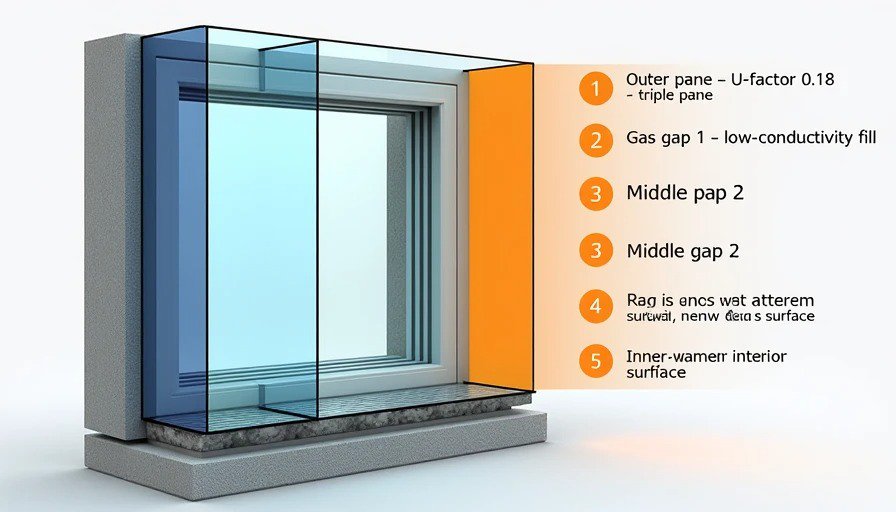
A triple-pane window, with its additional layer of glass and gas fill, has a much warmer interior surface—typically 45-50°F on that same 20°F morning. That's a 10-15°F difference in surface temperature. You don't lose as much radiant heat to the window. The room feels warmer, even at the same thermostat setting.
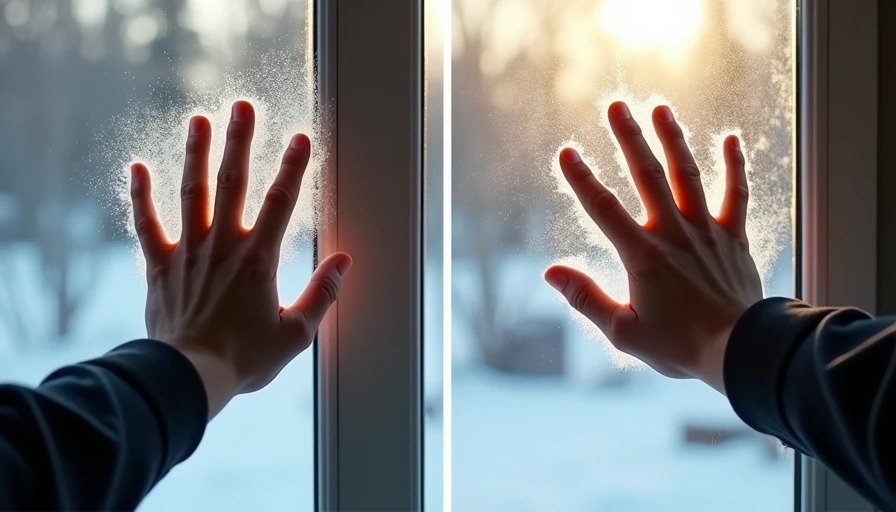
The temperature difference is significant enough that you can feel it with your hand—place your palm on the interior glass of a double-pane window on a cold morning, and it's noticeably cold. On a triple-pane, the glass is cool to the touch, but not uncomfortable. That's the comfort difference.
Condensation: the biggest hidden benefit
In Colorado, condensation on windows is common in winter, especially on the north side of the house and in rooms with high humidity—kitchens, bathrooms, and bedrooms where people sleep.
Double-pane windows often show condensation at the bottom edge on cold mornings. That water can freeze, can discolor the window frame, can create mold on the sill, and can damage the window's seal over time. It's a minor annoyance—but it's a sign that the window's interior surface is cold enough for the room's humidity to condense on it.
Triple-pane windows have a much higher dew point—the surface temperature stays above the room's dew point. In a typical Colorado winter, with indoor humidity at 30-40%, triple-pane windows rarely form condensation. The glass stays warm enough to stay dry.
I've walked into houses where the double-pane windows have black mold at the bottom of the sash from years of condensation. The homeowners didn't even notice it until I pointed it out. That mold is a health issue. It's also a sign that the window's thermal performance is inadequate for the room's conditions.
In my own house, I have triple-pane windows. I've never seen condensation on them. My neighbors, with double-pane windows, have condensation on their windows most winter mornings. The difference is immediate and visible.
Noise reduction: the surprising bonus
Triple-pane windows are significantly quieter than double-pane. The additional layer of glass and the extra gas gap reduce sound transmission.
The difference is roughly 5-8 decibels—which doesn't sound like much, but decibels are logarithmic. A 5 dB reduction is about a 30% reduction in perceived loudness.
For a house near a busy street, an airport, or a train line, this can be transformative. I've had clients tell me they can hear the highway at night with double-pane windows, and they can't hear it at all with triple-pane.
The extra acoustic performance comes from the two separate gas gaps: sound has to pass through two barriers with different transmission frequencies. The combination of the three panes and the two gas fills creates a much better acoustic barrier than a single gap.
The durability factor
Triple-pane windows are more expensive, but they also tend to last longer—for a few reasons.
First, the interior pane stays warmer, so there's less thermal stress on the glazing. The temperature differential between the interior and exterior surfaces is smaller, meaning the glass expands and contracts less with temperature changes. That reduces the stress on the seal and the glass itself.
Second, triple-pane windows often come with better hardware—the sash is heavier and more robust. The additional weight requires a stronger window frame, and that often means a higher-quality product.
Third, the reduced condensation means less moisture on the window frame and sill, reducing the risk of rot or decay in wood-framed windows and reducing the risk of mold growth on any frame type.
I've seen triple-pane windows last 25+ years with minimal maintenance. Double-pane windows often start to show seal failure at 15-20 years—a fogging condition where the argon gas has leaked out and moisture has entered the gap. Replacing double-pane windows at 20 years is common. Replacing triple-pane windows at the same age is less common.
The longer lifespan offsets some of the cost difference. If a triple-pane window lasts 10 years longer than a double-pane, the total cost of ownership is lower.
When triple-pane doesn't make sense
Triple-pane windows aren't right for every house.
If you have a house with poor framing, poor air sealing, or no insulation—typical of many older homes—the windows are not the biggest problem. The heat loss through the walls and roof dominates. Upgrading to triple-pane windows in a leaky house is like putting a high-performance window in a sieve—the rest of the building is the real problem.
If you live in a mild climate—say, coastal California or the southeastern U.S.—triple-pane windows don't make much sense. The temperature difference between indoor and outdoor is small. The energy savings are minimal. The condensation and comfort benefits are also less significant.
If you're on a tight budget, I'd recommend spending the extra money on air sealing the building before upgrading to triple-pane. Air sealing is often cheaper, more cost-effective, and reduces heat loss more than window upgrades.
What I recommend for Colorado homes
I spec triple-pane windows on every new build and major renovation I do in Colorado—except for the highest-budget houses where the owner wants a specific aesthetic that's only available in double-pane.
Why? Not for the energy savings. The energy savings pay back too slowly.
I spec triple-pane for comfort. The room feels warmer. The condensation is gone. The house is quieter. The windows last longer. And the client is happier, even if the energy bill is almost the same.
I also spec triple-pane for climate resilience. Colorado's weather is extreme—the daily temperature swing, the high altitude, the intense sun. A window that's rated for typical climate conditions often struggles in Colorado. Triple-pane windows perform better in extreme conditions, and I've seen them hold up better over time.
The cost difference on a new build is about 3-5% of the overall construction budget. On a renovation, it's higher—10-15% of the window budget—but I still consider it money well spent.
The clients who go triple-pane rarely regret it. The ones who go double-pane often wish they'd upgraded, especially in the winter.
The counterintuitive take
Triple-pane windows are better—but not primarily for energy savings.
If you're buying triple-pane windows to save money on your energy bill, the math might not work. The energy savings are small, and the payback period is long.
But if you're buying triple-pane windows for comfort, condensation control, noise reduction, and durability—then they're worth every dollar. They make the house feel warmer, quieter, and more comfortable. They reduce the mold risk on the windows. They hold up better over time.
And if you're building a house in Colorado—where the climate is cold, the sun is intense, and the temperature swings are dramatic—triple-pane windows should be a standard specification, not an upgrade.
The energy savings are the headline. But the comfort is the punchline.
No notes on this sheet yet.