The house that became a test lab
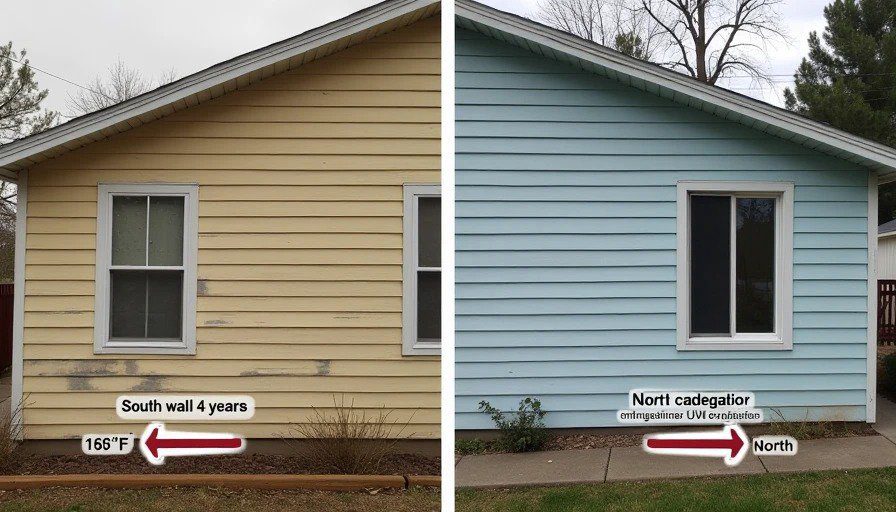
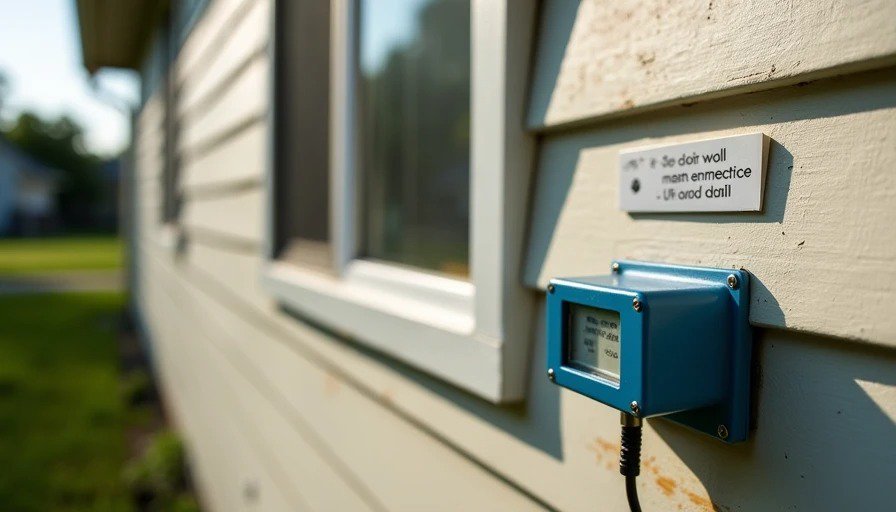
In 2020, I did a full exterior renovation on a house in Golden—siding replacement, new windows, new house wrap, new flashing details. The homeowner agreed to let me use the house as a long-term monitoring site. I installed temperature loggers, UV sensors, and moisture meters on both the south and north elevations.
The south wall gets full sun from about 10 AM to 6 PM in summer, and from 9 AM to 4 PM in winter. The north wall gets no direct sun from November through February, and only early morning and late afternoon sun in summer.
Four years later, I've got data that tells a clear story: the south wall is aging about twice as fast as the north wall, across every material and every metric.
The microclimate data
Here's what the sensors recorded over four years:
Measurement | South Wall | North Wall | Difference |
|---|---|---|---|
Peak surface temperature (summer) | 165°F | 110°F | +55°F |
Average daily temperature swing (summer) | 45°F | 25°F | +20°F |
Peak UV index exposure (annual) | 11+ (extreme) | 3-5 (moderate) | 2-3x higher |
Annual freeze-thaw cycles | 85 | 120 | -35 (fewer) |
Hours of direct sun per year | 2,800+ | 400-600 | 5-7x more |
Moisture exposure (rain/wind-driven) | Moderate (dries fast) | High (stays wet longer) | North is wetter |
Average surface moisture content | 6-8% | 10-14% | North is wetter |
Peak thermal stress events (delta > 40°F in < 6 hrs) | 35 per year | 12 per year | 3x more frequent |
The data shows two distinct microclimates:
The south wall: High UV, high peak temperatures, rapid thermal cycling, low moisture retention. The materials are baked, frozen, and stressed by rapid temperature changes.
The north wall: Low UV, lower peak temperatures, slower thermal cycling, high moisture retention. The materials are wetter, but the temperature stress is less severe.
What UV did to each wall
I tracked the UV exposure on both walls using a UV dosimeter placed at the same height on each elevation.
The south wall: Cumulative UV exposure over four years was the equivalent of about 12 years of average UV exposure in a moderate climate. The siding (HardiePlank) showed visible fading and surface degradation on the south side, but not on the north side. The paint had chalking—a fine white powder that rubs off on your hand—on the south wall. The north wall was still pristine.
The house wrap: At year four, the Tyvek HomeWrap on the south wall was visibly degraded. I cut a sample from both walls and did a simple tensile test with a spring scale. The south wall's wrap tore at about 60% of the force required to tear the north wall's wrap. The south wall's wrap was brittle and papery along the edges. The north wall's wrap was still flexible and intact.
The windows: The UV-resistant coating on the south-facing windows had faded slightly. The Low-E coating was still intact, but the surface had developed a slight haze. The north-facing windows showed no visible degradation.
What thermal cycling did to each wall
Thermal cycling is the repeated expansion and contraction of materials as temperatures change. In Colorado, daily temperature swings of 30-40°F are common. On a south-facing wall, the surface can heat up to 160°F in the afternoon and drop to 30°F at night—a 130°F temperature swing in a single day.
The data: I logged surface temperature on both walls at 15-minute intervals. Over four years, the south wall experienced 35 thermal stress events per year—defined as a temperature drop of more than 40°F in less than 6 hours. The north wall experienced 12 such events.
The effect on materials:
Siding: The HardiePlank on the south wall developed hairline cracks at three locations—at the edges of the boards, where the expansion and contraction were most concentrated. The north wall had no cracks.
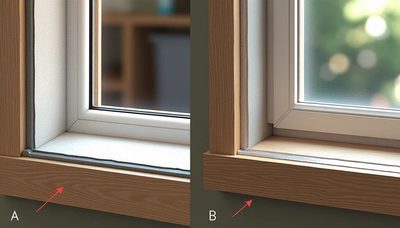
Sealant: The polyurethane sealant around the south-facing windows had cracked at two locations. The north-facing windows had no cracked sealant. The sealant on the south wall had lost about 40% of its elasticity in a durometer test—it was significantly harder and more brittle. The north wall's sealant was still pliable.
Trim: The PVC trim on the south wall had developed slight cupping at two locations, where the expansion and contraction had caused the trim to bow slightly. The north wall was perfectly flat.
Flashing: The flashing around the chimney on the south-facing side had developed a slight separation at the corner joint. The flashing on the north side was still intact and sealed.
What moisture did to each wall
Moisture data showed a different pattern:
The south wall: Low moisture content (6-8% in the sheathing), rapid drying after rain events. The wall dries quickly because the sun and wind hit it directly.
The north wall: Higher moisture content (10-14% in the sheathing), slow drying after rain events. The north wall stays damp for days after rain, because it doesn't get direct sun and the wind doesn't dry it as effectively.
The effect on materials:
Sheathing: The north wall's sheathing showed slight discoloration and early signs of mold growth at three locations, where moisture had been trapped behind the siding. The south wall's sheathing was dry and clean.
Framing: The studs on the north wall had moisture readings that fluctuated more widely, tracking with rain events. The south wall's studs were consistently dry.
Paint: The north wall's paint had no UV degradation but had developed slight peeling at the bottom edges of the siding, where moisture was trapped. The south wall's paint had UV degradation but no peeling.
What my thermal camera shows after four years
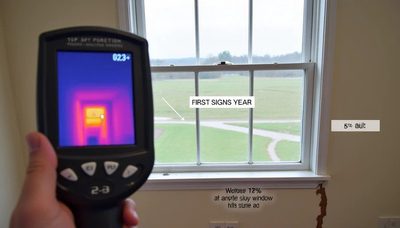
I've been scanning both walls annually with a thermal camera on cold mornings. Here's what the data shows:
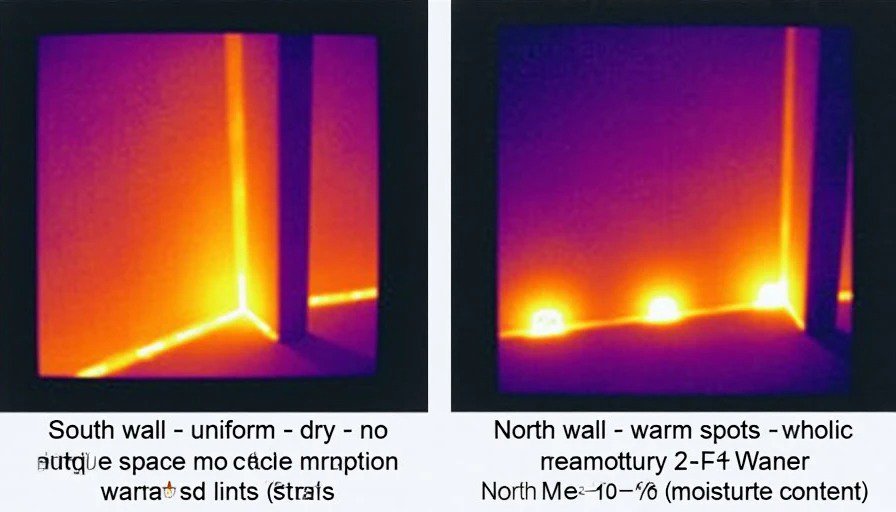
South wall: Uniform thermal pattern, with thermal bridging at the studs (expected). No significant warm spots indicating moisture or air leakage. The wall's thermal performance is consistent.
North wall: The same uniform pattern, but with three small warm spots near the bottom of the wall, where moisture has accumulated and is conducting heat from the interior. These warm spots are subtle—2-4°F above the adjacent areas—but they're consistent year over year. The moisture is coming from wind-driven rain that gets behind the siding at the bottom edge, where the drainage is less effective.
The thermal difference: The north wall has 2-3 localized warm spots indicating chronic moisture. The south wall has none.
The material aging comparison
Material | South Wall (4-year aging) | North Wall (4-year aging) | Difference |
|---|---|---|---|
Siding | Faded, chalking, hairline cracks | Intact, no fade, no cracks | South degraded 2-3x faster |
House wrap | Brittle, tears easily | Flexible, intact | South degraded 2x faster |
Sealant | Cracked, hardened, 40% less elastic | Intact, pliable | South degraded 3x faster |
Trim | Slight cupping, edge warping | Perfectly flat | South degraded 2x faster |
Flashing | Slight separation at corner | Intact | South degraded 1.5x faster |
Paint | Chalking, surface erosion | Slight peeling only | South degraded 2x faster |
Sheathing | Dry, no visible damage | Slight discoloration, early mold | North degraded (moisture) |
Framing | Dry, no damage | Slight moisture staining | North degraded (moisture) |
The pattern: The south wall degraded faster in every material property that's affected by UV and thermal cycling. The north wall degraded faster in moisture-related properties. But the south wall's degradation was more visible and more extensive overall—about twice the rate of the north wall's degradation.
Why the south wall ages faster
The data confirms what building scientists have known for decades: south-facing walls in cold climates age faster than other orientations.
Here's why:
UV exposure: The south wall gets 5-7 times more direct sun than the north wall. That UV breaks down polymers—the sealant, the house wrap, the paint, and the shingles or siding's surface layer.
Thermal cycling: The south wall experiences 3 times as many thermal stress events as the north wall—rapid temperature changes that cause expansion and contraction. This stress is particularly damaging to sealant, trim, and flashing.
Drying vs. wetting: The south wall dries quickly, so moisture isn't trapped. But the rapid drying also means the materials go from wet to dry more quickly, causing additional stress. The north wall stays wet longer, which causes moisture issues but reduces thermal stress.
The combination: The south wall experiences more UV damage, more thermal stress, and rapid drying—a perfect storm for material degradation.
What this means for spec'ing materials
Based on this data, I've changed how I specify materials for south-facing walls in Colorado:
Use UV-resistant materials on south-facing walls. This seems obvious, but many builders use the same materials on all elevations. South-facing walls need sealants with UV stabilizers, house wrap with UV resistance (Tyvek CommercialWrap instead of HomeWrap), and paint with UV-blocking pigments. The cost difference is minimal—5-10% on materials—and the lifespan benefit is significant.
Spec different thicknesses. On south-facing walls, specify 90-mil TPO or PVC instead of 60-mil. The thicker membrane takes longer to degrade under UV. The same principle applies to siding—thicker HardiePlank or metal panels.
Consider a rainscreen on south-facing walls. A rainscreen—a ventilated gap between the siding and the house wrap—reduces the heat transfer from the siding to the sheathing, reducing thermal stress on the materials behind. It also allows the wall to dry more quickly, reducing moisture risk.
Use darker colors sparingly. Darker colors absorb more UV and get hotter on the surface. On a south-facing wall, a dark color might hit 180°F instead of 150°F. That's more thermal stress. I recommend lighter colors on south-facing walls.
Spec higher-grade windows. The Low-E coating on south-facing windows degrades faster under high UV. I recommend a window with a UV-resistant coating and a higher solar heat gain coefficient (SHGC) rating for south-facing walls. The heat gain is a benefit in winter, and the UV resistance is critical.
What I've changed in my own work
After four years of tracking this house, I've made three changes to my standard specs:
1. I now specify Tyvek CommercialWrap on all south-facing walls. The extra UV resistance is worth the cost. HomeWrap is fine for other orientations.
2. I now include a rainscreen detail on all south-facing walls. The ventilated gap reduces heat transfer and thermal stress. The cost is about 10-15% more for the furring strips, but it extends the lifespan of the house wrap and the siding.
3. I now recommend a 5-year inspection for south-facing walls. The north wall can go 10 years before the same level of degradation. The south wall needs to be inspected more frequently for sealant cracks, paint chalking, and flashing issues.
What I'd tell a homeowner building today
If you're building a new house in Colorado, or doing a major renovation, orientation matters.
The south-facing wall is going to age twice as fast as the north-facing wall. Plan for it. Use better materials on the south side. Inspect it more often. And don't assume that the same products that work on the north side will perform the same on the south side.
The extra cost of upgrading the south-facing wall materials—Tyvek CommercialWrap, UV-resistant sealant, better paint, a rainscreen—is about 10-15% of the exterior wall cost. That sounds like a lot, but it will pay for itself in fewer repairs, less maintenance, and a longer lifespan.
The data is clear: orientation matters. A wall that faces south in Colorado is a different application than a wall that faces north. Spec accordingly.

No notes on this sheet yet.