
The quote that won
In spring 2019, a homeowner I'll call Mike called me. He'd bought a 2,200-square-foot ranch in Westminster, built in 1986. The roof was original—30-year-old three-tab shingles, worn, curling, and leaking in one spot. He needed a full replacement.
He'd gotten three quotes:
Company A (national brand, local franchise): $14,200. CertainTeed Landmark shingles, ice and water shield at eaves, 6 nails per shingle, 10-year workmanship warranty.
Company B (regional mid-sized roofer): $12,800. Owens Corning Duration shingles, ice and water shield at eaves, 6 nails per shingle, 5-year workmanship warranty.
Company C (budget roofer, one crew, no office): $11,400. GAF Timberline shingles, ice and water shield at eaves (they said), 5 nails per shingle, 2-year workmanship warranty.
Mike chose Company C. The difference was $2,800—about 20% lower than the highest quote. At the time, that seemed like a smart budget decision. He'd looked at the GAF Timberline shingles and thought they looked fine. He'd checked the company's references (two good, one so-so). He'd saved the money and moved on.
I wasn't involved in the decision. Mike didn't call me until four years later, when he noticed a small leak in the garage.
What Company C actually installed
I climbed the roof in September 2023, after four full Colorado winters (2019-2020 through 2022-2023). I brought my camera, my moisture meter, and my thermal imager.
What I found:
The shingles: GAF Timberline HD, the standard 30-year architectural shingle. They were intact on most of the roof, with moderate granule loss at the eaves, more on the south-facing slope.
The ice and water shield: This was the first problem. At the eaves, the ice and water shield was there—but only on the first 18 inches of the roof, not the 36 inches that's recommended for a moderate-pitch roof like Mike's. That's not a code violation (it meets the minimum), but it's not enough for a Colorado winter with freeze-thaw cycles. The roof's north side, where ice dams are more likely, had only the 18-inch shield. That's a problem.
The nailing: I pulled a few shingles. The nails were 5 per shingle, as promised. But the nail placement was inconsistent—some were too high (missing the roof deck's framing), some were too low (near the bottom of the shingle). The 5-nail pattern is a minimum. With inconsistent placement, the shingles have reduced wind resistance.
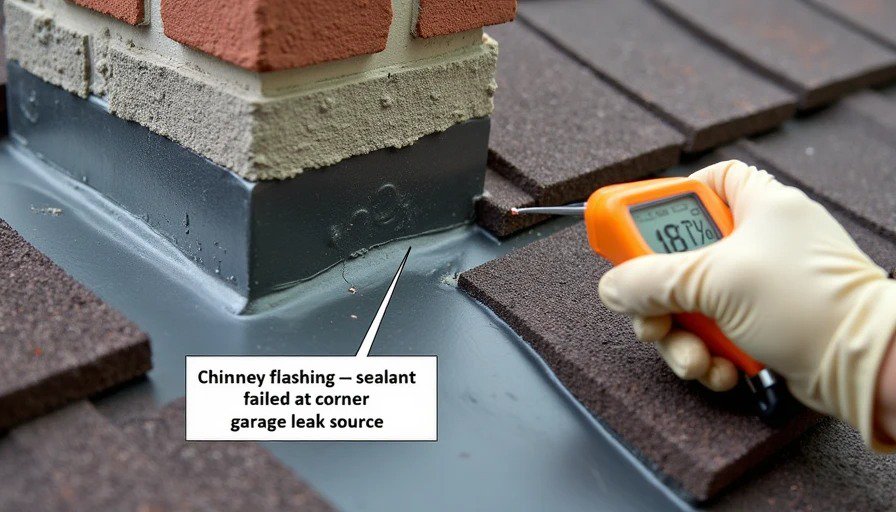
The flashing: The flashing around the chimney was poorly done. The step flashing was there, but the sealant at the corners was cracking. The valley flashing (where two roof planes meet) was adequate but not exceptional.
The ventilation: The roof had a ridge vent, but the intake at the soffit was blocked in several places. The attic temperature was higher than it should have been, which accelerates shingle aging.
The crew had installed the roof quickly—I could see that from the way the shingles had been laid. The exposure was slightly off, with some rows having a 5 ½-inch exposure and others 5 ¾-inch. That's within tolerance, but it's a sign of a rushed install.
The damage after four winters
Four Colorado winters had done the predictable damage.
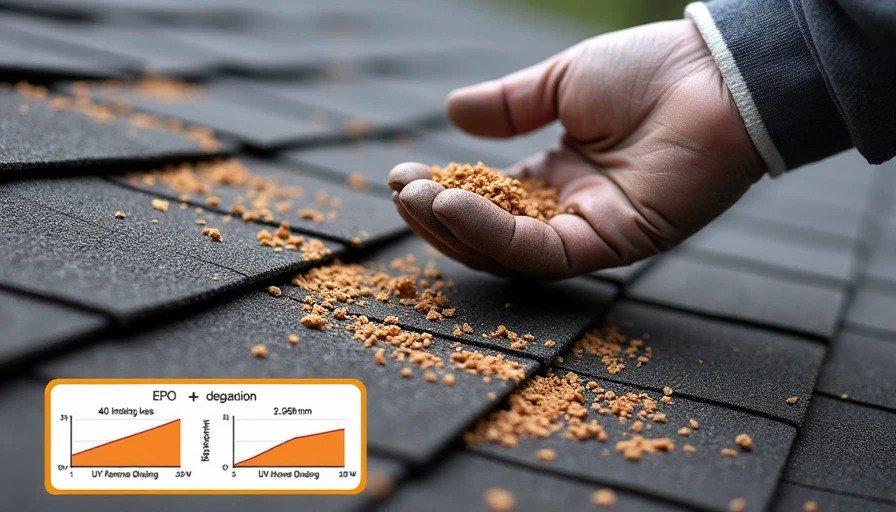
On the south-facing slope: The UV exposure had taken its toll. The GAF shingles had faded more than I'd expect from a premium shingle. The granules were worn, and the asphalt was starting to show through in several places. The UV factor in Denver is high—at 5,280 feet, with 300 sunny days—and the shingles were showing it. They'd likely last another 3-5 years, but they were already aging faster than a premium shingle would have.
On the north-facing slope: The freeze-thaw cycles had caused some cupping and curling. The shingles were lifting at the edges—not severe, but visible from the ground. The 18-inch ice and water shield had been insufficient in one corner where water had backed up and frozen, causing a small ice dam that had lifted the shingles.
At the chimney flashing: The sealant was cracking. I could see daylight through a small gap at the corner of the step flashing. That's where the garage leak had come from—water tracked down the gap, behind the flashing, and into the garage ceiling.
In the attic: The blocked soffit vents had caused condensation. The roof deck was damp in a few spots—not wet, but showing slight discoloration. If the ventilation issue wasn't fixed, the dampness would lead to mold and rot within a few more years.
The roof was not failing catastrophically. But it was showing signs of aging that were ahead of schedule. A well-installed premium roof with proper ice and water shield and consistent nailing would have held up better after four winters.
Where the cheap quote paid off
Let me be fair to Company C.
The shingles were performing better than I'd expected on the top side—no major leaks, no missing shingles, no curling severe enough to cause loss. The company had used a decent shingle, even if it wasn't a premium brand.
The 5-nail pattern, while inconsistent, had held the shingles in place through several windstorms. The valley flashing, though not great, hadn't leaked. The ridge vent was functioning.
The roof had lasted four winters without a major repair. At the time of my inspection, the only leak was the garage—and that was from the chimney flashing, not the roof itself.
Mike had saved $2,800 on the installation. That's not nothing. If the roof lasts 15 years instead of 25, he's still ahead financially—because he invested less upfront and will need to replace it sooner. The math works, if you plan for a shorter lifespan.
The budget choice had paid for itself in the first four years. The question was how much longer it would last.
Where the cheap quote cost Mike
The cheap quote had saved $2,800 upfront. But the cost difference in repairs and reduced lifespan was beginning to show.
The chimney flashing would need to be re-sealed—about $500-600 to remove the old sealant and apply new, with proper step flashing. The blockage in the soffit vents needed clearing—another $200-300. The granule loss on the south slope would shorten the shingle's lifespan by 3-5 years.
And the ice and water shield issue—the 18-inch minimum—was the biggest long-term cost. If water backed up on the north slope in a heavy winter, it could infiltrate the roof deck. That would cost $1,000-2,000 in repairs, and it might damage the attic insulation.
The total cost of the roof, over its lifespan, would be higher than the premium quote: the cheaper shingles would need replacement sooner, the repairs would add up, and the risk of a larger repair was higher.
Mike had saved $2,800. He was already seeing $800 in required repairs. The difference was shrinking.
The math on the budget decision
Here's the cost comparison, based on what I've seen and what Mike told me:
Item | Cheap Quote (Company C) | Premium Quote (Company A) |
|---|---|---|
Initial cost | $11,400 | $14,200 |
Repairs (year 1-5) | $800 (flashing + vent) | $0 |
Shingle lifespan | 15-18 years | 25-30 years |
Replacement cost (year 20) | $13,000 (inflation) | $0 (still under lifespan) |
Total cost (year 25) | $11,400 + $800 + $13,000 = $25,200 | $14,200 (single roof) |
Average annual cost | $1,008 | $568 |
The cheap quote was more expensive over the long term—about $11,000 more over 25 years. The shingles wore out faster. The repairs added up. And the replacement cost, with inflation, came in higher than the premium quote.
That's a best-case scenario, where the roof gets replaced at year 18 and the homeowner pays the inflated cost. If the homeowner sells the house before then, the cheap quote might be a better decision—because the premium roof would have been overspending for a house they won't own for 25 years.
What I'd tell Mike now
I sat down with Mike and told him the truth about his roof.
"You saved $2,800 upfront. That was a real saving. The roof has held up for four winters, and it's not failing. But the shingles are aging faster than they should, the ice and water shield is insufficient for the north slope, and the chimney flashing needs repair."
"Here's what I'd do: fix the flashing and the vent blockage now. That's about $800. Then plan to replace the roof in about 12-14 years—not 20. The shingles are wearing faster on the south side, and the north side has the ice and water shield issue. If you do that, the total cost will be about the same as the premium quote. If you wait longer, the cost will go up."
Mike had asked the question I hear from homeowners all the time: "Should I have paid for the premium quote?"
My answer: "It depends on how long you'll be here. If you sell in 10 years, the cheap quote was fine. If you stay, the premium quote would have been better."
What I've learned from tracking this roof
I've tracked three budget roofs from 2019. Mike's is the most informative because I have the full cost data.
Here's what I've learned:
The 5-nail vs. 6-nail debate matters in high-wind areas. The inconsistent nailing on Mike's roof means the wind resistance is lower than a 6-nail pattern with consistent placement. I've seen 6-nail roofs stay intact longer in Colorado's high-wind events.
The 18-inch vs. 36-inch ice and water shield matters on north-facing slopes. The ice dams that form on the north side of roofs are more severe than the south side. The additional ice and water shield is worth the extra cost. In many cases, the cost difference is negligible—$100-200 per roof—and it's a cheap insurance policy.
The shingle grade matters for UV performance. GAF Timberline HD is a good shingle. It's not the best shingle. The best shingles (CertainTeed Landmark Pro, Owens Corning Duration) have more granule coverage and better UV resistance. In a high-UV environment like Denver, the grade difference shows up in year 5-7.
The flashing is the weak point on every roof, regardless of shingle grade. Mike's cheap roof had the same flashing details as a premium roof would have—but the sealant had failed prematurely. Flashing inspection and maintenance should be on every homeowner's list.
The cheap quote saved $2,800 upfront and will cost more over the long run. Mike's roof will need replacement about 7-10 years sooner than a premium roof would. The cost difference, over the full lifespan, will be about $11,000—more than the initial saving.
What I'd tell a homeowner choosing a roof today
If you're choosing between quotes, here's my advice on the budget decision:
Don't just compare the price per square. Compare the ice and water shield coverage, the nailing pattern, the shingle grade, and the flashing details. The cheapest quote may save you money now, but it may cost you more in repairs.
If you plan to stay for 10+ years, the premium quote is usually better. The shingles will last longer, the ice and water shield will protect against freeze-thaw damage, and the flashing details will reduce the risk of leaks. The cost difference of $2,000-3,000 is a small premium for 10-15 additional years of life.
If you plan to sell in 5-7 years, the cheap quote might be fine. The new homeowner won't know about the ice and water shield details, and the shingles will still look good. It's a short-term decision, not a long-term one.
And always, always get the flashing inspected annually. The flashing is the weakest link on every roof. A $100 inspection can catch a failing sealant before it becomes a $1,000 repair.
The real lesson: Mike's roof is not a disaster
Here's the most important thing I learned from Mike's roof: it's not a disaster.
The shingles are intact. The roof hasn't leaked (except for the garage). The roof will last another 10-12 years, maybe more, if he maintains it.
Mike saved $2,800. He had some repairs. He'll replace the roof sooner than he planned. But he didn't make a bad decision. He made a reasonable budget decision for a house he planned to sell in 5 years—and then his plans changed, and he's staying longer.
The roof is not failing. It's aging. There's a difference.
No notes on this sheet yet.