The day your roof "passed"
When you bought your asphalt shingles, they came with a stack of test credentials.
Class A fire rating. UL 2218 Class 3 or 4 impact resistance. ASTM D3161 wind resistance. Maybe even a 30-year or 50-year warranty printed on the bundle.
These are real tests, performed in real laboratories, by real engineers following real standards. I know because I used to be one of those engineers. I've run these tests. I've watched shingles pass, fail, and everything in between.
Here's what nobody tells you: every single one of those tests was performed on a brand-new sample, in a controlled environment, under conditions that bear only a passing resemblance to what your roof actually experiences.
This isn't conspiracy. It's not manufacturers cheating the system. It's the fundamental limitation of standardized testing: you can't compress ten years of Colorado weather into a week of lab time and expect the results to mean the same thing.
Let me show you what I mean.
Test 1: UL 2218 – The "hail test" that doesn't use hail
If you've shopped for roofing in Colorado, you've heard of UL 2218. It's the impact-resistance standard that assigns Class 1 through 4 ratings. Class 4 is the highest—the one that gets you insurance discounts and the marketing brochures with dramatic photos of shingles surviving "hail" impacts.-
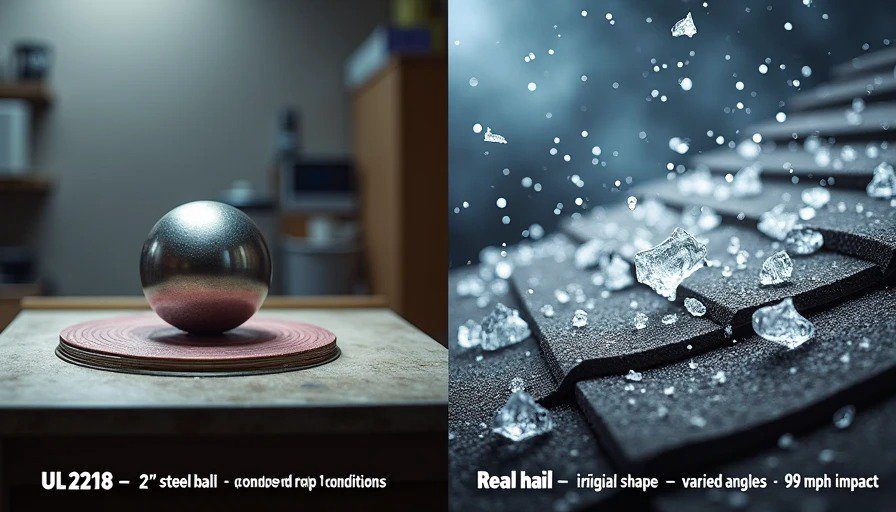
Here's how the test actually works: a steel ball—1.25 to 2 inches in diameter, depending on the class—is dropped from a height of 12 to 20 feet onto a shingle sample.
The sample is installed on a test deck per manufacturer instructions, conditioned to specific temperature and humidity, then impacted in various locations.
Afterward, the deck is deconstructed, the shingles are bent over a mandrel, and inspectors check for cracks on the back side.
No cracks? You pass.
Steel ball. Not ice. Not hail. Not the irregular, jagged, sometimes softball-sized chunks of ice that fall out of Colorado skies at 90 miles per hour.-
The test is useful. It tells you something about how the shingle's substrate responds to a hard, concentrated impact. But real hailstones aren't uniform spheres. They don't strike at perfect 90-degree angles. And they certainly don't stop at 2 inches in diameter—Colorado has seen hail exceed 4 inches in recent years.
One industry insider put it bluntly: "The steel ball impact during UL 2218 is shocking, but the smash of the ice ball is more dramatic."
More dramatic, and more destructive. And not part of the test.
Test 2: ASTM E108 – The fire test that doesn't age
ASTM E108 is the standard for roof-covering fire tests. It's how shingles earn their Class A, B, or C fire ratings.-
The test simulates fire originating outside the building—burning brands, flame spread, intermittent flame exposure—under controlled laboratory conditions.-
It's a perfectly good test for what it measures: how a brand-new roof covering responds to fire on the day it's installed.
But here's the limitation that keeps me up at night: ASTM E108 doesn't measure aged performance.-
A Class A rating tells you that a new shingle, installed perfectly on a test deck, resists severe fire exposure. It tells you nothing about what happens to that fire rating after five years of UV exposure, three dozen freeze-thaw cycles, and a few hailstorms that cracked the granule surface and exposed the underlying mat.
The fire performance of an aged shingle is not the same as the fire performance of a new one. The industry knows this. But the test standard doesn't account for it.-
Test 3: ASTM D3161 – The wind test with a 16-inch limit
ASTM D3161 evaluates wind resistance of asphalt shingles using a fan-induced procedure that delivers a stream of air across the exposed surface of test specimens.-
The test has a stated limitation that most homeowners never see: it's limited to steep-slope roofing products applied with a maximum exposure of 16 inches.-
More importantly, the standard itself acknowledges: "The results of this test do not directly correlate to wind speeds experienced in service, and no accommodation is made in this test method for building height, building exposure category, or building importance factor."-
In plain English: the test tells you how a shingle performs under a fan in a lab, with a specific exposure width, at ground level. It does not tell you how that same shingle performs on the second story of your house, in a wind pattern accelerated by the geometry of your neighborhood, during a Front Range windstorm that hits 80 mph with gusts to 100.
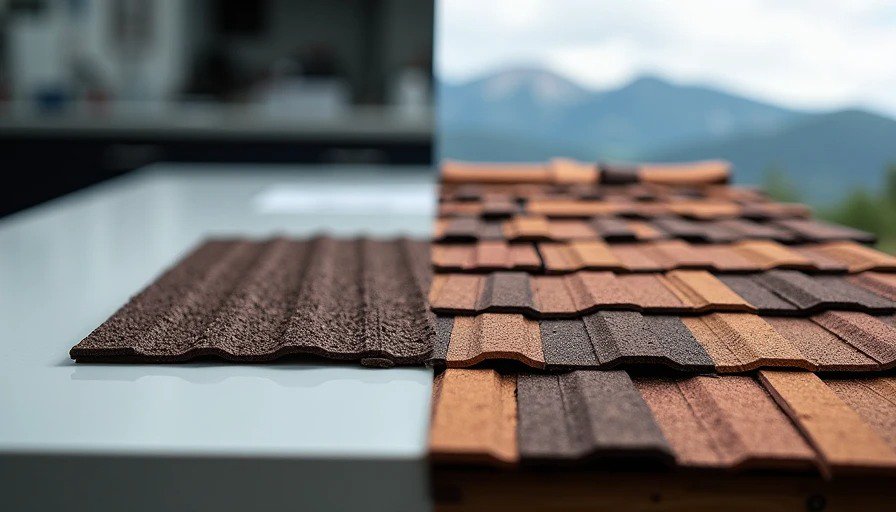
What the tests don't measure: the Colorado factor
Here's where the gap between lab and field becomes a chasm.
UV degradation. Denver sits at 5,280 feet, with over 300 sunny days per year. UV intensity at this altitude is significantly higher than at sea level.
Asphalt shingles that are rated for 30 years nationally often shift closer to 15–22 years in Colorado, simply because the sun eats them faster.-
The granule loss starts, the underlying asphalt is exposed, and deterioration accelerates.-
No ASTM test accounts for this altitude-adjusted UV exposure.
Freeze-thaw cycles. A single Colorado winter can put a roof through dozens of freeze-thaw cycles, especially along the Front Range where daily temperature swings are common.-
Water seeps into micro-cracks, freezes overnight, expands, and weakens the material. Then it thaws, contracts, and the cycle repeats.-
Each cycle slightly weakens shingles, flashing, fasteners, and even the roof decking beneath.-
Lab tests don't do this.
Thermal cycling. A Denver summer day can hit 95°F; that same night can drop to 55°F. That's a 40-degree swing in a single day, repeated hundreds of times per year. Materials expand and contract. Sealants fatigue. Adhesives lose their bond. The IBHS Roof Aging Farm program has documented that the number of times a shingle's temperature changes by 25°F or more in a single day is a significant driver of product-to-product performance variability.-
No standardized test accelerates this realistically.
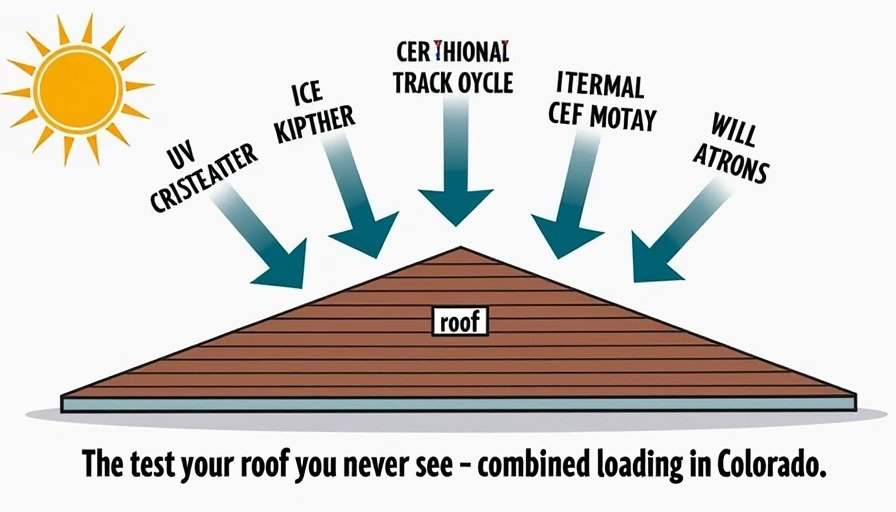
Combined loading. This is the big one. In the real world, your roof doesn't face one stressor at a time. It faces UV degradation and freeze-thaw cycles and thermal cycling and wind and hail—all at once, in overlapping, compounding sequences. A hailstorm that hits a shingle already weakened by three years of UV exposure is not the same as a hailstorm that hits a brand-new sample in a lab.
The industry tests each variable in isolation. Your roof experiences them in combination. That's the gap.
Why this matters for your checkbook
The gap between lab performance and real-world performance isn't just academic. It has a direct, measurable impact on how often you replace your roof and how much it costs you.
In Colorado's Front Range "Hail Alley," the National Weather Service reports significant hail events occur an average of 7 to 9 times per year within the metro area.
Colorado ranks second nationally in annual property and roof hail damage, experiencing approximately 234 hail events each year.
The May 2024 Denver metro hailstorm alone caused nearly $2 billion in damage.
Standard shingles in Denver typically require replacement after 2 to 3 major hail events. Class 4 systems often survive 4 to 5 events before showing actionable damage.-
That's a meaningful difference—but even Class 4 isn't hail-proof.-
A 10-year cost comparison for a typical Denver home tells the story: standard shingles at $12,000 initial cost, with 2–3 claims filed over 10 years and $4,500 in deductibles, total around $32,500. Class 4 shingles at $14,500 initial cost, with 0–1 claims and $1,500 in deductibles, total around $28,000.
The Class 4 upgrade saves money over time—but only if you understand that the lab test results translate to real-world performance in a specific way.
And that translation is not one-to-one. Not all Class 4 shingles perform equally in the field, because the UL 2218 test doesn't capture all the variables that matter in Colorado.-
The test your roof will never see
Here's what I'd design if I could run one test that actually mattered for Colorado homeowners.
I'd take aged shingles—not new ones—and subject them to a combined loading sequence: UV exposure for 2,000 hours, then freeze-thaw cycling, then impact testing with irregular ice projectiles at varied angles, then wind uplift, then repeat the sequence three or four times to simulate multiple storm seasons.
I'd test the same shingle model from three different production batches, because batch-to-batch variability is real and the lab tests don't catch it.
I'd test samples installed by actual roofers, not lab techs, because installation quality varies and the tests assume perfect installation.
And I'd publish the results with full transparency: which products held up, which failed early, and which failure modes emerged that the standard tests never predicted.
The industry doesn't run this test because it's expensive, time-consuming, and the results would be messy. But it's the test that actually matters for your house.
What you can do with this information
You can't run the combined-loading test yourself. But you can ask better questions.
When a roofer or salesperson shows you a UL 2218 Class 4 rating, ask: "How does this specific shingle perform in Colorado's UV conditions? Have you seen it age well on other local roofs?"
When you see a 30-year warranty, ask: "Is that prorated? What voids it? Does it cover labor or just materials?"
When you're comparing quotes, don't just compare shingle brands—compare the installation details. Flashing quality, valley construction, ventilation, ice and water
These details often matter more than the shingle grade, and no lab test measures them.
And understand that every test your roof passed was performed on a perfect sample, in a perfect lab, on a perfect day. Your roof doesn't live in that world. It lives in Colorado.
No notes on this sheet yet.