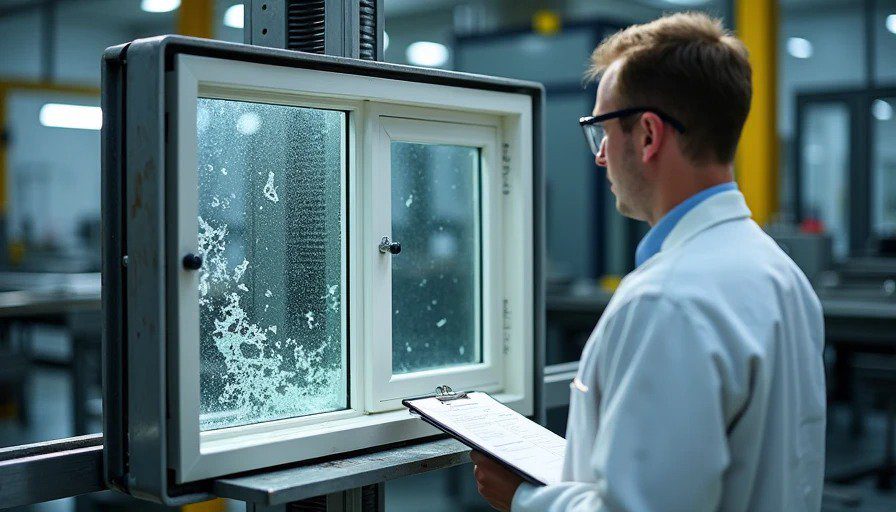
My job used to be making materials fail
Thirteen years ago, I sat in a climate-controlled lab outside Denver, operating a universal testing machine.
My job was simple: mount a window sample on the test frame, then crank up the pressure until the frame twisted, the glass shattered, or the sealant tore apart. Then I documented the failure, wrote the report, and told the manufacturer: "This is where your product failed, and here's how it happened."
In plain English: I killed building materials for a living. Then I wrote their death certificates.
Back then, I had ASTM standards memorized like most people know their own phone number. E330 for wind pressure, E331 for water penetration, E108 for fire resistance on roofs—I could sketch the test setups from memory. Manufacturers sent me new products, I designed verification protocols, tested them to destruction, and told them exactly what broke first, and why.
That work gave me an intuition for material behavior that I still rely on today. I knew how much wind pressure a window could take before its frame racked. I knew how many weeks a waterproof membrane could sit submerged before it delaminated. I knew how many ice-ball impacts a shingle could survive before it cracked. I probably knew more about how these things fail than almost anyone in the industry.
But over time, something started bothering me. A crack that I couldn't ignore.
The first crack: lab numbers didn't match what I saw in the field
In the lab, everything is perfect. Temperature at 70°F, humidity at 50%. The sample is mounted on a precision steel test frame, sealed with care, and tested exactly per the standard.
Colorado job sites are not perfect.
January brings subzero freeze-thaw cycles. July sun hits like a high-desert UV torch. Spring hailstorms drop ice like gravel from the sky. Daily temperature swings often exceed 30°F. My environmental chamber never simulated any of that.
But the bigger gap was installation.
In the lab, my samples were installed by the most skilled techs, following every spec to the letter. In the real world, windows get installed by a guy with a nail gun, rushing to finish his twentieth unit of the day, thinking about dinner. A great window, missing one flashing detail or a few screws, will leak within three years. Guaranteed.
That's when it hit me: the "pass" I certified in the lab, and the "pass" that actually survives a Colorado winter, are two completely different things. And nobody was connecting them.
Stepping out from behind the bench
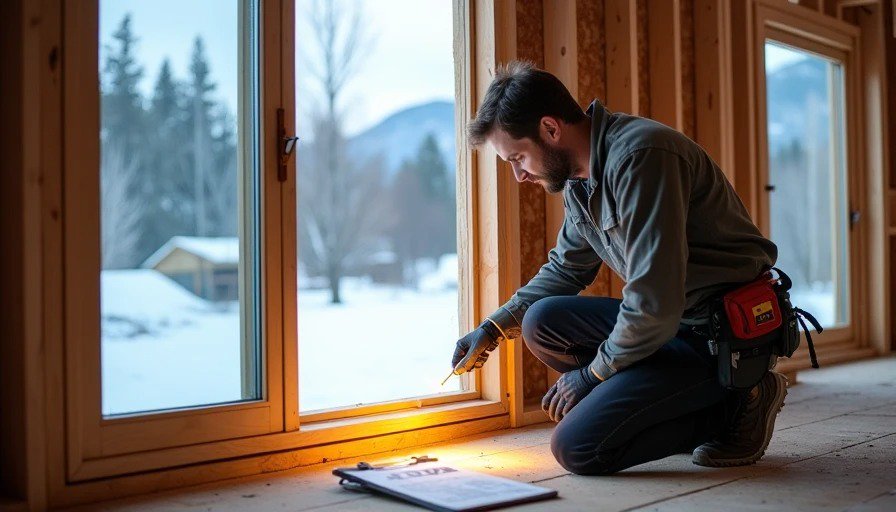
So at thirty, I made a call that confused everyone who knew me: I left the lab, got my GC license, and started building—so I could see with my own eyes how these materials really aged.
I won't lie—the first two years humbled me hard. A guy who spent his career writing test reports suddenly had to negotiate with subs, manage client expectations, and wait for concrete to cure. It wasn't a step down. It was a complete species change.
But I had one advantage that most new GCs don't: I already knew what to look for.
Other contractors would finish a window install and walk away. I'd stay behind to check the flashing overlap, the sealant compression, the screw spacing. I knew exactly which details would come back to haunt the house in three to five years—because I'd already seen accelerated failure modes in the lab.
Then I started doing something that my competitors thought was pointless: I went back.
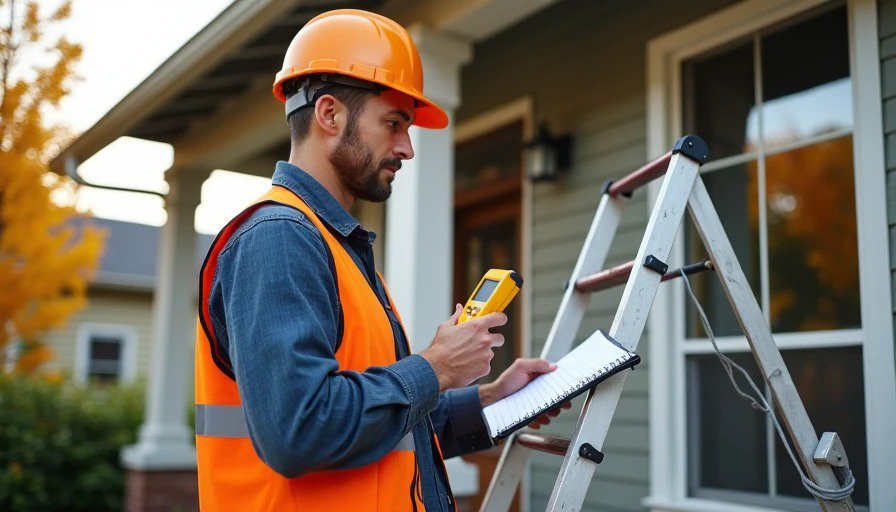
Every few years, I'd knock on the doors of houses I'd worked on, ask to take photos, and document how the windows, roofing, and flashings had held up. Most contractors call that "customer service." I called it "harvesting field data." What took weeks in an accelerated lab test now took years in real time—but the sample size wasn't a few test units. It was hundreds of installations, spread across one of the harshest climates in the continental U.S.
Why "day-one photos" are almost worthless
Go look at any home improvement content online. 99% of it stops at the moment of installation.
"New windows installed—looks great!" Then what? How did the seals hold up after three years? How much did the air leakage increase after five? Did the frame develop micro-leaks that rotted the sheathing after ten? Nobody goes back to show you that. Because everyone has moved on to the next job.
But the true performance of a building envelope is never determined on installation day. It's determined on year three, year five, and year eight.
The Shell Test exists to close that gap.
I'll design test protocols in the shop—ASTM-based, but also tailored to Colorado's extreme conditions. I'll document installations in the field—not as a "how-to," but as a record of real-world variables and their long-term consequences. And I'll keep going back to see what actually survived, and what quietly failed years before anyone noticed.
I don't test dishwashers. I don't tell you what looks good.
You've probably already seen our content boundaries. Let me make them crystal clear so there's no confusion about what this is and what it isn't:
I test the shell. Windows, roofing, siding, waterproofing, insulation—the entire outer layer that protects your house from the elements. If the shell fails, nothing inside matters.
I do not test interior finishes. No flooring, no paint colors, no tiles, no cabinets. I don't review dishwashers, refrigerators, toilets, or vacuum cleaners. And I will never—ever—tell you which color palette "works best with your lifestyle."
Not because those things are unimportant. But because dozens of other people are already covering them well, and almost nobody is willing to spend three to five years tracking the long-term performance of a single window.
That's my lane.
Two sentences that explain why you should listen to me
First: I learned how to make materials fail before I learned how to make them last.
Eight years in the Intertek lab taught me every way a window, a roof, or a flashing can break. Then ten years as a GC in Denver showed me what that failure looks like when real weather and real installers get involved.
Second: The stuff I install on your house is the same stuff I've already tested in my shop.
That's not a metaphor. I keep same-lot samples of windows and roofing on my backyard test racks, exposed to the same sun, hail, and freeze-thaw that my clients' houses get. When I go back for a three-year check, I'm comparing field performance against lab data and rack data—side by side.
I don't trust factory samples. I don't trust marketing brochures. I trust what I've personally crushed, soaked, frozen, baked, and documented.
Three things to take with you
If your house is in Colorado—or anywhere with real winters, hail, or brutal sun—your shell takes more abuse than you probably realize.
Most home content will tell you what looks nice. I'll tell you which window survived wind pressure up to X psf, which shingle passed UL 2218 Class 4 impact testing, which flashing tape kept its bond after 200 freeze-thaw cycles.
I don't offer style opinions. I offer data on whether your shell can hold up when it counts.
If you care whether your $15,000 window package is still airtight in year five, if you want to know if that premium roof upgrade will actually survive the next hailstorm, if you're wondering whether your contractor's "waterproofing upgrade" is worth the line item—then you're in the right place.
No notes on this sheet yet.