The call that confirmed what I already knew
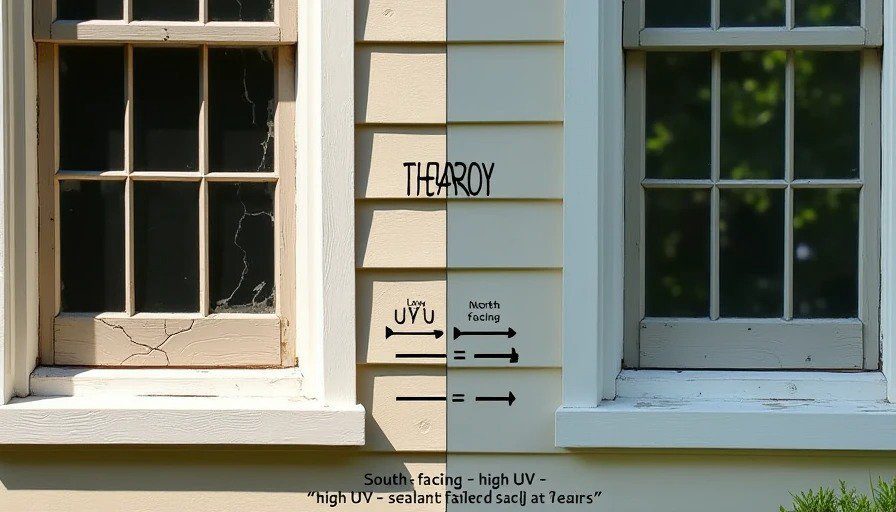
Last winter, I got a call from a homeowner in Boulder. They'd had new windows installed three years ago. The windows were fine. The sealant around the exterior trim—a high-quality polyurethane—was already cracking.
The installer had been back twice. Each time, they scraped out the old sealant, applied a new bead, and told the homeowner it was "just a bad batch."
The sealant wasn't defective. It was predictable.
I walked the house with the homeowner and pointed out the pattern: the sealant had failed on the south-facing side, where the UV exposure was highest. The north-facing side was still intact. The east and west walls showed intermediate degradation.
The sealant's failure followed the UV exposure exactly. The product wasn't the problem. The application conditions were.
The five factors that determine sealant life
Based on lab testing and field observations, I've identified five variables that determine how long a sealant will last in a given application.
These variables interact. Change one, and the lifespan changes. Change two, and it changes exponentially.
Here's the formula, in plain terms:
Sealant lifespan = (Base durability) × (UV factor) × (Temperature factor) × (Movement factor) × (Installation factor)
If you understand each variable, you can predict when a sealant will fail—and spec a sealant that will last longer.
Factor 1: Base durability (the product's intrinsic lifespan)
Every sealant has a base durability—the lifespan it would have in a perfect environment with no UV, no temperature extremes, no movement, and a perfect installation.
Here are the typical base durabilities for common sealant types:
Silicone: 30-50 years (best)
Polyurethane: 20-30 years
Acrylic: 10-15 years
Latex/Butyl: 5-10 years
These are base durabilities. They assume perfect conditions—no UV, no temperature cycling, no movement, and a perfect installation. In the field, the real lifespan is almost always shorter.
Why this matters: If you spec a sealant with a lower base durability, the field factors will accelerate its failure even faster. A latex sealant in a UV-exposed, high-movement joint might fail in 2-3 years. A silicone sealant in the same conditions might last 10-15 years.
Factor 2: The UV factor
UV radiation is the single most damaging environmental factor for sealants. It breaks down the polymer chains in the sealant, making it brittle and cracking.
The UV factor is a multiplier that reduces the sealant's lifespan. Here's what I've measured in the lab and observed in the field:
Low UV (north-facing wall, shaded): 0.9-1.0 (negligible reduction)
Moderate UV (east or west-facing wall): 0.6-0.8 (10-40% reduction)
High UV (south-facing wall, no shade): 0.3-0.5 (50-70% reduction)
Extreme UV (south-facing, high altitude, such as Denver): 0.2-0.4 (60-80% reduction)
In a high-UV environment, a polyurethane sealant with a 25-year base durability might only last 5-8 years. That's what I saw in the Boulder house: the sealant failed on the south-facing side, where the UV factor was about 0.4. The north-facing side, with a UV factor of about 0.9, was still intact.
The field lesson: If you're applying sealant on a south-facing wall in Colorado, use a UV-resistant sealant—silicone or a high-performance polyurethane with added UV stabilizers. And plan to re-apply it sooner than you would on a north-facing wall.
Factor 3: The temperature factor
Temperature extremes affect sealants in two ways: they accelerate chemical degradation, and they cause expansion and contraction that stresses the sealant.
The temperature factor is based on the range of temperatures the sealant will experience:
Stable temperatures (60-80°F, few extremes): 0.9-1.0
Moderate temperature swings (daily swings of 20-30°F): 0.7-0.8
Severe temperature swings (daily swings of 40°F+, extremes below freezing and above 100°F): 0.4-0.6
In Colorado, the temperature factor is severe. We have daily temperature swings of 30-40°F, and annual swings from below freezing to above 90°F. That's a stress that sealants in milder climates don't experience.
The temperature factor multiplies the UV factor. A sealant on a south-facing wall in Colorado might have a UV factor of 0.4 and a temperature factor of 0.6. The combined multiplier is 0.4 × 0.6 = 0.24.
That means a sealant with a 25-year base durability might last 25 × 0.24 = 6 years in that application. That's a dramatic reduction.
Factor 4: The movement factor
Sealants are designed to accommodate movement—the expansion and contraction of building materials due to temperature changes and structural settling.
The movement factor depends on two things: the joint's expected movement and the sealant's ability to accommodate it.
Low movement (joints between similar materials, small temperature changes): 0.9-1.0
Moderate movement (windows in wall, dissimilar materials): 0.6-0.8
High movement (sealants at expansion joints, large temperature changes): 0.3-0.5
A sealant with a 25% movement capability—meaning it can stretch to 25% of its original width—can handle most window and trim joints. But if the joint is poorly designed, or the materials are expanding and contracting more than expected, the sealant will fatigue and fail.
What I've seen in the field: The most common movement-related failure is at the corner of windows, where expansion and contraction concentrates stress. If the sealant isn't applied with enough depth—or if the joint is too narrow to accommodate movement—the sealant will crack at the corners first.
Factor 5: The installation factor
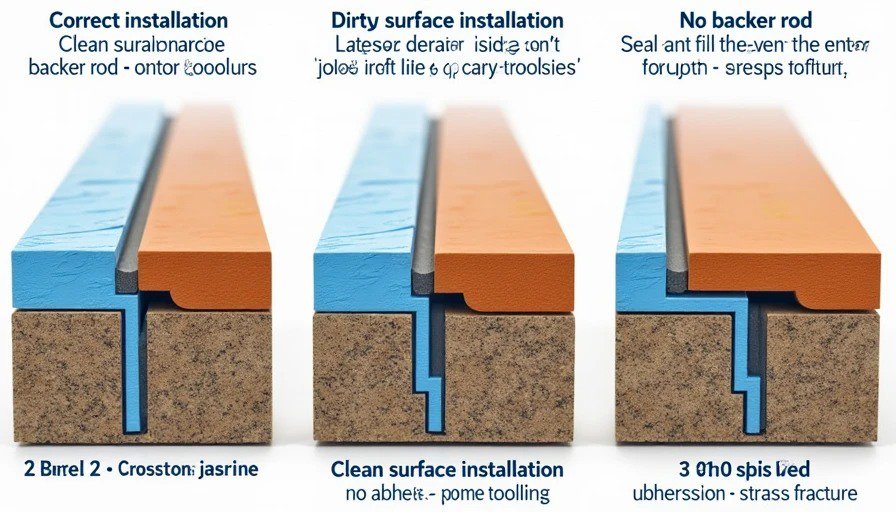
This is the variable that most failures trace back to—and the one that's most often overlooked.
The installation factor is a multiplier that reflects how well the sealant was applied:
Perfect installation (clean, dry surface, proper backer rod, proper tooling): 0.9-1.0
Good installation (clean surface, proper application): 0.7-0.8
Acceptable installation (moderately clean, slight gaps in tooling): 0.4-0.6
Poor installation (dirty or wet surface, no backer rod, no tooling): 0.1-0.3
A poorly installed sealant won't last. Even the best silicone sealant, if applied to a dirty or wet surface, will fail quickly. The sealant won't bond to the surface, the adhesion will break, and water will intrude.
The formula in practice
Let's calculate the expected lifespan for a typical sealant application in the Denver area.
Scenario: Polyurethane sealant on a south-facing window, with moderate movement, installed on a clean surface.
Base durability: 20 years
UV factor (south-facing wall): 0.4
Temperature factor (Denver): 0.6
Movement factor (moderate): 0.7
Installation factor (good): 0.8
Estimated lifespan: 20 × 0.4 × 0.6 × 0.7 × 0.8 = 2.7 years
That's roughly what I see in the field—a polyurethane sealant on a south-facing window in Denver lasting 3-5 years before it starts cracking.
Scenario: Silicone sealant on the same application.
Base durability: 40 years
UV factor: 0.4
Temperature factor: 0.6
Movement factor: 0.7
Installation factor: 0.8
Estimated lifespan: 40 × 0.4 × 0.6 × 0.7 × 0.8 = 5.4 years
Silicone lasts longer—about 5-6 years in the same application—but it's still not a lifetime solution.
Scenario: Polyurethane sealant on a north-facing wall in Denver.
Base durability: 20 years
UV factor: 0.9
Temperature factor: 0.6
Movement factor: 0.7
Installation factor: 0.8
Estimated lifespan: 20 × 0.9 × 0.6 × 0.7 × 0.8 = 6.1 years
North-facing walls last longer—about 6-8 years—because the UV exposure is significantly lower.
What I tell my clients about sealant lifespan
Based on the formula, I've developed a set of practical guidelines that I use for every job.
For polyurethane sealants (most common):
South-facing, exposed wall: plan for 3-4 years before reapplication
East/west-facing: plan for 5-7 years
North-facing: plan for 8-10 years
Protected (under eaves, north-facing): plan for 10-12 years
For silicone sealants (UV-resistant):
South-facing, exposed wall: plan for 5-7 years
East/west-facing: plan for 8-10 years
North-facing: plan for 12-15 years
Protected: plan for 15-20 years
For acrylic/latex sealants (not recommended for exterior):
South-facing, exposed: plan for 2-3 years
North-facing: plan for 4-5 years
These are field-based estimates, not lab-based. They account for the installation quality I typically see in the Denver area. If the installation is exceptionally good—the surface is perfectly clean, the backer rod is properly sized, the sealant is tooled correctly—the lifespan might be longer. If it's not, it'll be shorter.
How to apply the formula to your house
If you want to know how long your sealant will last, you can use the formula.
Step 1: Identify the sealant type (silicone, polyurethane, acrylic, or latex).
Step 2: Determine the exposure:
South-facing with direct sun? UV factor = 0.3 to 0.5
East/west-facing? UV factor = 0.6 to 0.8
North-facing or shaded? UV factor = 0.9 to 1.0
Step 3: Estimate the temperature factor:
Denver area (moderate? no—it's severe in winter and summer): 0.4 to 0.6
More stable climate: 0.7 to 0.9
Step 4: Estimate the movement factor:
Window trim joints (moderate movement): 0.6 to 0.8
Expansion joints (high movement): 0.3 to 0.5
Joints between similar materials (low movement): 0.9 to 1.0
Step 5: Estimate the installation factor:
Check the sealant: Is it clean? Is there a backer rod? Has it been tooled?
If yes to all: 0.8 to 1.0
If no to any: 0.4 to 0.7
Step 6: Multiply all factors and compare to the product's base durability.
It's not exact. But it's a useful tool for planning maintenance and avoiding surprises.
The pattern is clear
I've been tracking sealant failure since my lab days. The formula is consistent, and the pattern is clear.
Sealants fail predictably, in a sequence:
UV exposure causes the surface to become brittle.
Temperature cycling causes expansion and contraction, which stresses the brittle surface.
Cracks form at the stress points—usually at the corners of windows or joints with moderate movement.
Water intrusion follows the cracks.
Adhesion failure occurs at the substrate—the sealant loses its bond to the surface.
Water penetrates the wall and causes rot, mold, or structural damage.
The sealant's failure is the first link in a chain that leads to water damage.
What to do about it
You can't change the UV exposure, temperature, or movement. But you can spec the right sealant, install it correctly, and maintain it.
Use the right sealant:
South-facing, exposed: use silicone (UV-resistant) or a high-performance polyurethane with UV stabilizers
North-facing, protected: polyurethane is usually fine
Any exterior application: never use latex or acrylic—they'll fail in 2-3 years
Install it correctly:
Clean the surface thoroughly (remove dust, debris, old sealant)
Use the proper backer rod (slightly larger than the joint width)
Tool the sealant (smooth the surface, force it into the joint)
Apply at the right temperature (60-80°F for most sealants)
Inspect it regularly:
Check for cracks at the corners of windows
Check for gaps at the joints
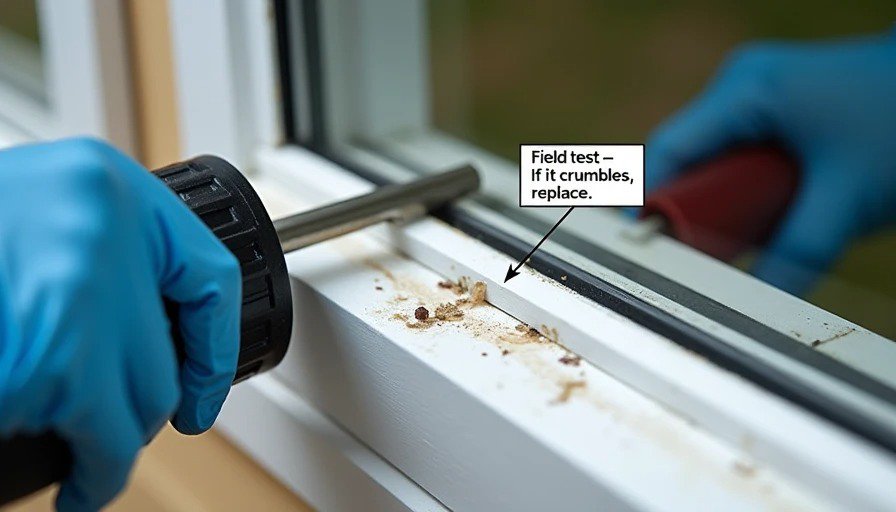
Check for brittleness (poke it with a screwdriver—if it crumbles, it's time to replace)

No notes on this sheet yet.